|
|  Subscribe in a reader | Subscribe to poobalan.com by Email
 The following appeared in Malaysiakini opinions column. Some interesting statistics provided by HINDRAF’s Ganabatirau. The suggestions are nice to hear, but my guess is that it will end up in the same place as the other proposals/memorandums submitted earlier by various groups.
Road map for Malaysian Indian problems proposed
V Ganabatirau
Jul 21, 09
11:30amThe upliftment of the Indians in Malaysia would require a more consolidated and concerted effort to achieve significant milage.
In an attempt to achieve this goal, we must engineer a logical and workable road map.
Such road map must be carefully evaluated and assessed and then must be put to work.
Such road map(s) must have the human element and blend with the 1 Malaysia policy currently advocated by the government.
We cannot ignore nor side line the secular principles held on to thus far.
In this process we must not and should not ignore suggestions and recommendations from all sectors of society and people.There are some who take advantage of the situation for personal gain. Some exploit the dire situation for political success.
There are the others who dwell in complete darkness without any sense of direction or responsibility but are keen to raise issues simply to remain relevant.
How many of us will do this with total commitment and conviction?
The current political climate has created artificial leaders who’s game plan is to provide lip service.
When the real issues surface, they don’t possess the mental apptitute or experience to handle and overcome problems and situations.
It’s a pity.
The Indians on the other hand don’t see matters in the correct perspective.
They are easily deceived and carried away by desperate politicians who care less for them and merely use them as tools.
March 8 mayhem continuesThis is evident after the March 8 th general election.
This mayhem will continue until such a time when realisation sets in.
We must not therefore be taken advantaged of under any circumstances nor be allowed to be used and exploited by any sector for whatever purpose.
Be that as it may, my concern is to present a workable, coherent and cohesive solution to solve problems faced by Malaysian Indians.
This plan is practical and if taken seriously and implemented, perhaps some of the common complaints faced can be solved.
The implementation of this plan would require a consolidated effort and support from the government and private sector.
In the past few years many nagging problems faced by the Malaysian Indians have been raised.
Unfortunately none provided plausible solutions.
Since we are principally responsible for the shaping of society and our destiny, then we must undertake this task and challenges very seriously for the preservation and survival of the race.
We the guardians of the future generation, must create security and stability for the coming generation. We must not gamble with their future for selfish reasons.
This would tantamount to doing a complete disservice to the present generation.
This heavy burden must be carefully measured and discharged. There will be no room for incompetence.
We must rise to become more resilient, self sustaining, competitive and marketable.
But this will require enormous resources, help, assistance and aid.
To facilitate this, the government must undertake to implement programmes to benefit Malaysian Indians.
This by no standard is an easy task but with determination and perseverance it is possible. As an initial step the government should consider the following:
(1) I appeal to the government to allocate RM10 billion initially to address critical problems currently faced by Malaysian Indians.
This fund should be handed over to a special task force created to overcome immediate pressing problems.
Task force to tackle issues
The task force should be a political entity comprising academicians, retired civil servants, private entrepreneurs and philanthropist of ethnic Indian origin.
They must solve the following critical issues:
(a) The task force must immediately bail out Maika Holdings Berhad.
Upon bailing out, it then becomes the duty and responsibility of the Task force to make the corporate body more viable and competitive. Perhaps a complete revamp and restructuring may become necessary. The body should act more transparently and engage in consultation before investing.It must act as a trustee and must hold the confidence and trust placed upon it by the shareholders. The body must strive to do better and must always display a progressive and advancing image.They must emerge competitive and become reliable. While risk taking is encouraged but it must be properly weighed.
(b) The task force will identify all Tamil schools in the country and will undertake constructive steps to improve their conditions and will negotiate with the respective authorities to buy the land if the school is sitting on private land. Additionally such schools should become fully aided schools within 2 years from the date of identification. The Education Ministry must co-orporate in this matter so as to preserve the cultural identity and heritage of Malaysian Indians.
(c) The task force will carry out a nationwide study to ascertain all Hindu places of worship and will register them as such and not as societies or as a company.If such places had existed prior to independence, then the same should rightly be recognized as a heritage building. All demolition and forcible removal of such places of worships must be immediately halted. The relevant local authorities and state government must be appropriately advised on the implications if any, that may arise in the event of unlawful demolistion or removal. This is necessary to preserve the secular sanctity currently preserved and cherished by the people.
Poverty levels must be ascertained
(d) The task force must carry out a nationwide study to ascertain the real poverty level of Malaysian Indians. In the year 2004, poverty among Malaysia Indians was estimated to be 370,000 households. The number of hardcore poor households was said to be 1200 which constitutes 0.3 percent. This data is provided by the Economic Planning Unit (EPU). The statistics require revision and serious consideration to determine the correct incidence of poverty among Malaysian Indians. Once the correct statistics are available, then a proper plan is to be drawn to eliminate the current poverty level. To accomplish this task perhaps, it would be wise to conduct a national study comprising both urban and rural population. Placing undue reliance upon existing statistics could cloud the study and may present a wrong picture.
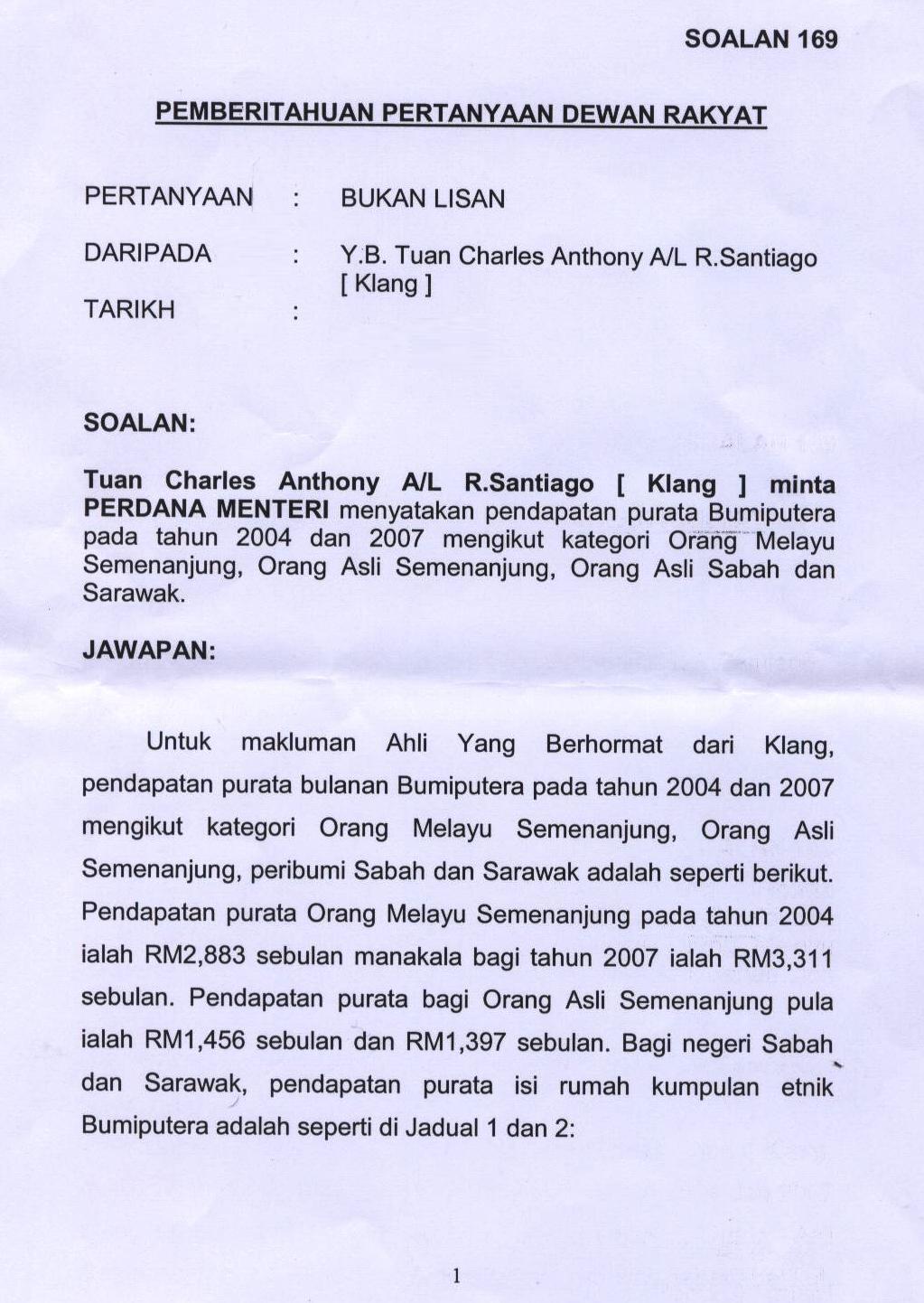
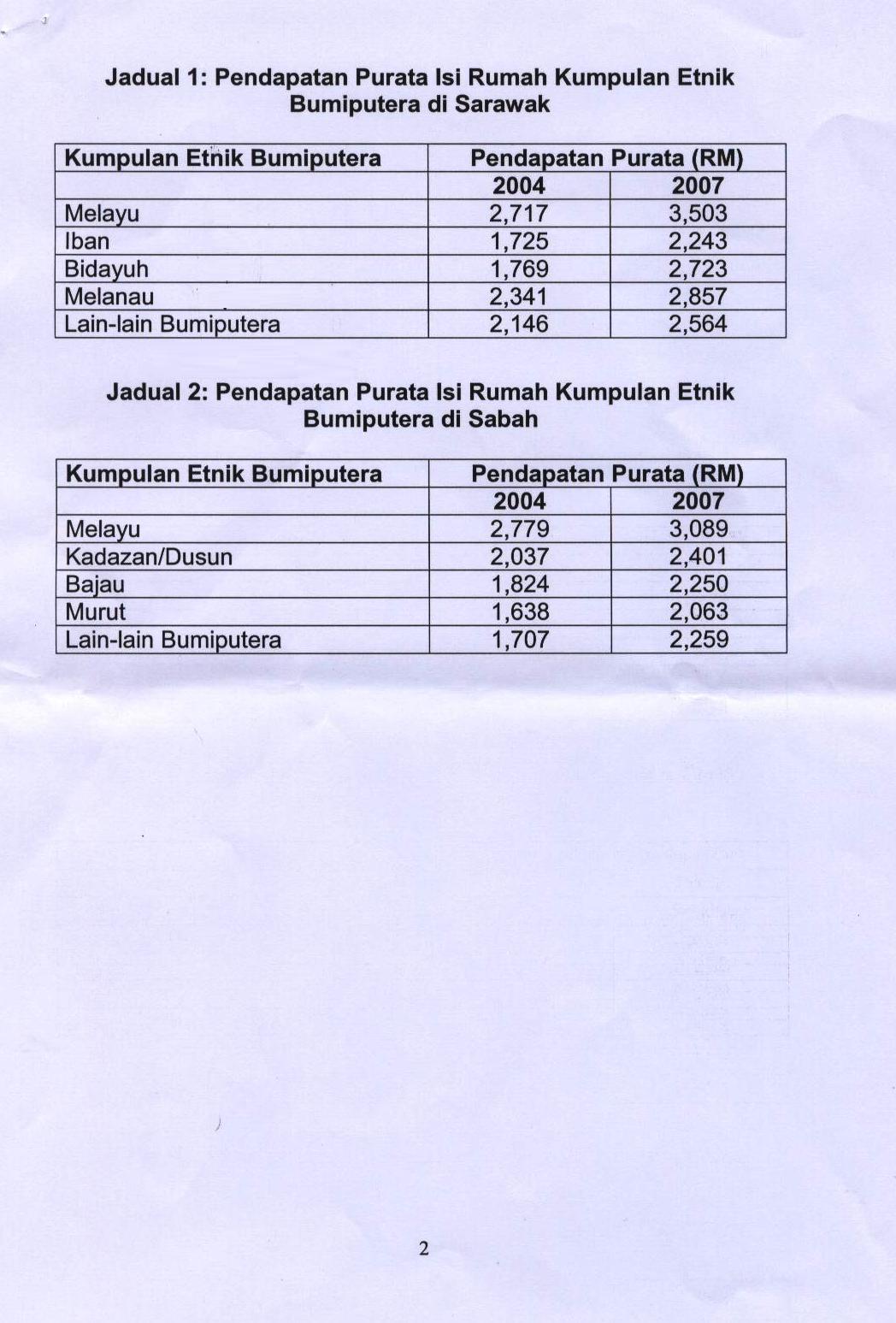
(e) The task force must ascertain the household income of Malaysian Indians. In the year 2004, the gross monthly household income of Malaysian Indians was said to be RM 3456.00 with an average annual growth rate of 5.0 percent. According to the Income Group Stratification 20 pecent of the Upper Class Malaysian Indians earn RM 6456.00 per month and they constitute 360,000 individuals. 50 percent of the middle class Indians earn RM 2460.00 per month and they constitute 900,000 individuals. The remainder belong to the lower class who earn RM 1092.00 per month and they constitute 540,000 individuals. This source was provided by the Yayasan Strategik Sosial (2005). The study must draw comparisons with the other races and distinctions as well as the disparities must be given proper weight. It’s virtually wrong to maintain a general and standard rule for all races in determining the monthly gross household income. The specific needs of the races must be taken into account in determining the household income.
Indians in the civil service
(f) The task force must ascertain those real reasons why Malaysian Indians are not keen to join the civil service. Is it due to an inferiority complex or are they not welcome? Perhaps frankness should prevail in this matter. If there exists prejudicial elements, it’s important to address those issues so that the current set backs can be overcome without discrimination or marginalization. In the year 1990, 8.2 percent of Malaysian Indians were employed with the government which is 17,560 of the total Indian population. This statistic was provided by OPP2 (1991) (Second Outline Perspective Plan) . What positions held by Malaysian Indians in the government sector was never disclosed. What are the positions now? Surely the positions now are rather different and require immediate remedial measures.
(g) The task force must propose a constructive plan or road map to increase the equity share of Malaysian Indians. Any plan proposed must adhere strictly to the time frame to achieve the target set. The Federal Government must directly monitor the advancement and progress of this plan from time to time and in the event of delay, those responsible should be made accountable and answerable to the government.
The current equity shares of Malaysian Indians is hardly 1.2 percent. This is deplorable. By 2020 the government must increase the equity share of Malaysian Indians to 10 percent. The projected 3 percent by 2020 is far too little and all plans formulated for that purpose should be re-evaluated.
(h) The task force must create a venue or mechanism where Malaysian Indians, in particular, can play a more effective and significant role in the making of policy decisions. In the present political climate, Malaysian Indians merely constitute 10 percent of the national population and are forced to adopt a secondary role or back seat when it comes to policy matters. More often they are not consulted. This can be very frustrating and undermines the culture of secularism cultivated thus far. To avoid the far reaching effects, perhaps the government must adopt a more proactive approach.
Create Indian majority areas
Consultation and engagement will advance the nation in the right direction. It will undoubtedly enhance the sense of belonging which is currently eroding steadily.
(i) The task force must, in consultation with the government, create or endeavor to create and preserve constituencies with Indian majority. Such creation will provide a sense of security and continued survival of an ethnic race. There is no real fear in this. The delineation of parliamentary and state constituencies is currently causing serious fragmentation of Indians. Certainly this does not auger well on the Election Commission. Perhaps reconsideration has now become so necessary. For instance, in Klang the Indian population constitute 19 percent and in Port Dickson 20.7 percent. Kuala Selangor, Seremban, Hilir Perak and Ulu Selangor have an Indian population of more than 18 percent. These constituencies must be preserved with the current Indian strong hold and representatives elected must remain Indian.
Similarly, the State of Selangor has an Indian population of 18 percent followed by Negeri Sembilan and Perak having 17 percent and 14 percent, Pulau Pinang has 11 percent, Kedah and Melaka respectively having 8 percent and Johore has 6 percent. These states must allocate more seats for Indian candidates to better represent their interest.
The current allocation of 9 Parliamentary seats and 27 States seats is grossly insufficient. It is imperative that the government must engage in re-evaluation.
(j) The Task force must engineer a magical formula to combat and defeat crime among Malaysian Indians. As at 1996, there were 2,251 Indian prisoners. In the year 2002, there were 3864 Indian prisoners. The alarming rise in the number of Indian prisoners is quite worrying and disturbing. In the year 2004, Indian youths in prison were 16.4 percent and youths in
custody was 65.5 percent and juveniles constituted 7.6 percent.By our standard, the statistics provided are quite disturbing and disheartening. We must therefore fashion reform programmes that would be beneficial to them and would have a long term success.
NEP for Indians
Additionally, the elements contributing to an increase in the crime level must be equally understood. Upon identification of these elements, we must carefully address them. While this may be a huge task, the government must create solutions to overcome them. It’s quite pointless to shelf them or leave them unattended. Crime by nature is contagious and a concerted effort is necessary.
(k) The task force must encourage Malaysian Indians to take part in the private sector. Business licenses should be made freely available and all unfair requirements should be abandoned. Application for such licenses should be simple and straight forward. Bureaucratic red tape should be reduced. Preferential requirements should not cloud such applications.
The question of discrimination must never arise. Once again this would require the more realistic approach and the current rules and regulations in force must be carefully modified to accommodate the less fortunate Indians.
(l) The task force must recommend to the Malaysian government in the strongest language asking the government to replicate the NEP for Malaysian Indians. I also ask the government to fix a time frame in the implementation of the NEP for Malaysian Indians.
The government must undertake this responsibility. This task must never be left to a political party. The approach to be taken in the implementation of the NEP must be wholesome and there should not be any apprehension.
(m) The task force must recommend to the government that all Indians without ID must be issued of one with immediate effect without any hesitation or reservation. Any confirmation that they may seek prior to issuance of the ID’s must be minimal and such process must never be complicated. The total number of individuals without ID’s must be accurately ascertained. For this purpose a nationwide pilot study must be carried out.
(n) The task force must consistently engage in dialogue with interested and concerned parties so as to improve the living conditions of Malaysian Indians. When set backs are identified and raised the Task force must encourage and welcome suggestions and recommendations. In this connection, it is always important to maintain an open mind with a view to resolving problems.
I welcome the 1Malaysia concept currently advocated by the government.
In the hope of fostering greater understanding tolerance and a sense of belonging I hereby present a preliminary solution plan which is cohesive and coherent to improve the conditions of Malaysian Indians.
V GANABATIRAU was arrested under the Internal Security Act in December 2007 for his activities with Hindraf. He was released last April.