|
 Subscribe in a reader
 |
Subscribe to poobalan.com by Email
Malaysian Potpourri/The Nepalese Community: Courage and loyalty their hallmark
RINA DE SILVA
| Mukhesh and his wife Urmila were matchmade by their parents — a tradition still practised by the community to preserve their culture. |
Mention Nepalese and what comes to mind are Gurkha soldiers, who are well known for their fierce fighting spirit. But as RINA DE SILVA discovers, Malaysian Nepalese are a gentle group of people, determined to preserve their customs and traditions despite their dwindling population.
MALAYSIAN Nepalese Mukhesh Bahadur, 28, made an important trip to Nepal recently. He went back to tie the knot with his 24-year-old Nepalese bride, Urmila. They were matchmade two months ago. Mukhesh is one of four young Malaysian Nepalese men who were matchmade to brides in Kathmandu this year. While many young men his age may rebel at the idea of having their wives decided for them, Mukhesh sees matchmaking as a good thing.
"This helps us to marry fellow Nepalese and preserve our culture. We cannot marry local Nepalese women because most of us are related. This is why the elders and our parents seek brides for us in Nepal," he said.
President of the Gurkha Society in Selangor and Federal Territory, Bhaal Bahadur, said families sometimes resorted to the Internet to look for a suitable match. Bhaal’s daughter, Asha Devi, for instance, found her American Nepalese husband through a matchmaking website. "It is important for us to marry a Nepalese because we have our own language, unique festivals and rituals that are not shared by any other community in the world," he said. Bhaal said that most Nepalese were married by the age of 30. The community also frowns on interracial marriages. There have been instances when community elders boycotted such weddings.
The Malaysian Nepalese community started during World War Two. One of the first to land in Malaya were Nepalese soldiers known as Gurkhas. Originating from a place called Gorkha, they were brought here by the British army who admired their bravery and loyalty. After the war, the Nepalese were recruited to fight the communists and during the Indonesian confrontation. Gurkha soldiers who died in Malaya were buried in cemeteries in the country with the biggest being in Labuan. The cemeteries are maintained by the Commonwealth War Graves Commission, of which the British government contributes 80 per cent of its budget.
Other Nepalese, like Bhaal’s father Bhakta Bahadur, were not in the army but came on their own accord to seek greener pastures. Bhakta, who is now 81, started off as a jungle scout when he joined the Special Police Constabulary at the age of 16 during the communist insurgency in Negri Sembilan and Johor. Many Nepalese joined the police force when they arrived here. "Don’t forget our community fought the communists and helped Malaysia gain independence," said Bhakta.
By 1957, there were about 5,000 Nepalese settled in Malaya. However, following independence, many returned to their homeland as they feared they would be chased out as they did not have identity cards, said Bhaal.
As a result, only a small community remained. They were later offered citizenship and today, there are about 600 Malaysian Nepalese living mostly in Rawang, Selangor. They are from four clans — Rana, Chettri, Rai and Gurung. "Many have regretted leaving Malaysia because life is still difficult in Nepal," said Bhaal.
Despite being assimilated into Malaysian society, the Nepalese community maintains close ties with relatives and friends in Nepal. Unlike their forefathers who were mostly plantation guards, many of the young Malaysian Nepalese today have attained success as doctors, bankers, hoteliers, teachers and businessmen.
Despite the changes taking place, Bhaal believes that community ties are strong enough to keep the Malaysian Nepalese together and to preserve their culture. He is confident that the number of Nepalese here will increase as the younger generation, which makes up three-quarters of the community, raise their own families.
Celebrating their joy, sharing their grief
DESPITE being busy with their own lives, most Nepalese make it a point to be there for each other in times of need or during celebrations. When death occurs in the community, everyone is expected to attend the funeral. "It will be disrespectful if they do not come," said Tara Mun Bahadur, 41.
Members of the community also share in each other’s joy. Among the young Nepalese who have made the community proud is Kavitha Jaisi who was the top Nepalese student in 1998 when she scored seven A1s and two A2s in the Sijil Pelajaran Malaysia examination. Tara’s brother Rajes, 32, became the first Malaysian Nepalese to go to university when he obtained a place in Universiti Sains Malaysia, Penang.
Today, the Malaysian Nepalese community is overshadowed by the presence of more than 300,000 migrant workers from Nepal. Many of the locals would like to meet their countrymen, but there has been little opportunity for a get-together."When I see them, I greet them in our language and they are pleasantly surprised to know that there are Malaysian Nepalese living here," said Tara.
President of the Gurkha Society in Selangor and Federal Teritorty, Bhaal Bahadur, who is also the owner of Secure Guards Sdn Bhd, invites his Nepalese guards to his home during Dashera — an auspicious festival held in October. "It is a chance for them to get to know the local community, but it is difficult to bring everyone together as we have no common place to meet," he said.
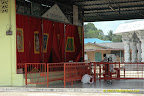
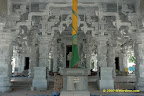
The 15-day Dashera celebration commemorates the victory of the Goddess Durga over demons. Homes store a jug of holy water, symbolising Shakti or the energy of Durga. In Nepal, thousands of sheep, goats, ducks, chickens and water buffaloes are slaughtered as sacrifice. In Malaysia, though, only goats are sacrificed because mutton is said to bring luck. The Nepalese pray at the three shrines in Rawang and the mutton is cooked and served to all those who attend the function.
Nepalese families also keep Khukri, a traditional knife used by British Gurkha soldiers in the past, as they believe that the knife can ward off evil spirits.
Although the Nepalese have been part of the country for half a century, not many Malaysians are aware of their existence. Tara’s daughters Seneeta, 19, and Sereena, 14, said they constantly had to explain to their classmates that they were not Indians, Malay or Chinese, or of mixed parentage. "I got so fed up. One day I just told them that I’m Hindustani," said Seneeta.
10 year wait for homes, community hall
TEN years ago, there was hope among the Malaysian Nepalese community that they would live in their own settlement. The Selangor government had promised them a piece of land measuring 4.53ha in Sungai Bakau, Rawang. The land was a form of compensation after the community was forced to leave their settlement — Kampung Gurkha — in Rawang to make way for a housing project. The land given to the Nepalese was on a 99-year lease and it was meant for 83 houses, a community hall and the first Nepalese temple. But until today, the land remains barren.
President of the Gurkha Society in Selangor and Federal Territory, Bhaal Bahadur, said many of the older members of the community who were given housing lots had since retired and were unable to get loans to build their houses. "Some of them have passed away and the transfer of land titles to their family members is still not completed." Bhaal said some families had bought houses elsewhere and were no longer keen on living in the settlement.
Although the plan for a Nepalese settlement seems in doubt, the Gurkha society hopes to proceed with the building of the temple and a shelter for stranded Nepalese migrant workers. He said there were plans to bring a Nepalese priest to teach the younger generation how to read and write in their mother tongue.