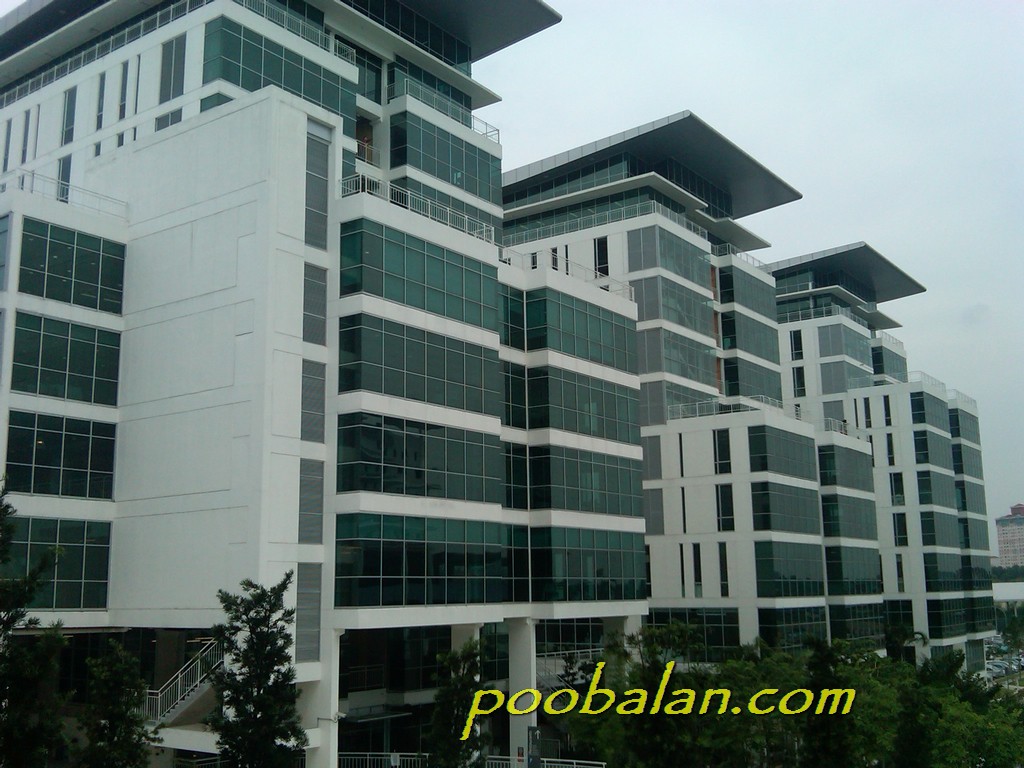
Impact of Menara Warisan Merdeka

/* October 29th, 2010 by poobalan | View blog reactions 3 comments »
 Subscribe in a reader | Subscribe to poobalan.com by Email


I’m sure fellow Malaysians would have been bored to death hearing about the 100-storey tower proposal costing RM5 billion as unveiled by PM Najib in his Budget 2011 speech. The project is to be financed by Permodalan Nasional Malaysia (PNB) hence considered private funding.  Its not even investor’s money but PNB’s own money.  So, what can non-investors complaint about. Some details about the location:

PNB paid RM310mil or RM220 per sq ft to buy the 36-acre land from Pengurusan Danaharta Nasional Bhd in 2000. Hamad said the market value of the land was estimated at RM800 per sq ft today. Of the 36 acres, around 17 acres are occupied by Stadium Merdeka and Stadium Negara, which have been identified as a national heritage site. Conservation works have been undertaken to restore their heritage characteristics and the two stadiums are now being managed by the National Heritage Trust.

The project is supposed to have shopping complex and condominiums as well.

Some of the benefits/supporting statement for the project, as mentioned in many reports and speeches are:

– spillover effect to other industries [but for how long?]

– an icon for developing Malaysia [hmm…]

– attract foreign companies to set up office here. [possible of course]

– boost economy [ can other things boost better?”]

– provide 5000 jobs [make KL more crowded!]

– not involving government money [thank God!]

– KLIA, KLCC and Penang bridge was also protested, but now is being used by everyone or by the protestors and brings much benefit to people. [true, but two of them are public infrastructure. Not sure how KLCC is doing]

The reasons given by protestors:

– already have many unleased space in KL area. [but in this case, PNB is going to occupy some of tower]

– congestion [which part of KL got no congestion la?]

– can utilise money in other areas like transportation, poverty eradication etc. [PNB is not doing charity, OK!]

– can relocate to Kg Baru [Can be considered].

– if project fails, government may need to spend public fund to bail out PNB [now, this is worrying!]

– its just a personal icon for PM [well, don’t we all need to be remembered for something?]

– no guarantee that locals (read: bumiputras) will benefit [of course la. Its a global village. You want be jaguh kampung, sorry la].

For me, its PNB’s money and PNB’s land. As long as government can guarantee won’t bail out, should be OK. BUT, since its a development project, there should be proper study and impact assessment done. In this way, public can voice out how the project will cause positive/negative impact to the surrounding area. Can suggest to improve transportation in tandem with the building development, for example.

If given a choice, I would prefer if the project is carried out away from KL city centre area. Reason is that it can spur more development. For example, can set up the tower in Sepang, Hulu Selangor, Kuala Langat, (oops, all PR area! No Go area for the moment) or Negeri Sembilan. This will provide decongestion, spur secondary and tertiary industries, and more job opportunities. The areas mentioned are still relatively near to airport and city centre, so not a big problem to attract tenants.

What do you think?

Update on Crematorium proposal in Subang Jaya

/* October 28th, 2010 by poobalan | View blog reactions No comments »
 Subscribe in a reader | Subscribe to poobalan.com by Email


Yup, Batu 14 Puchong is in Subang Jaya municipality.

We hear from the MPSJ president himself on the status of the crematoriumEarlier, there was a commotion during MPSJ’s budget meeting when the crematorium was mentioned. Read it here.

A crematorium is needed in Subang Jaya municipality following the rapid population growth over the past 10 years.

However, before the facility is constructed, a few details have to be taken into consideration, such as research, location, design of the building and cremator, cost and allocation as well as the management of the facility.

We also have to ensure the crematorium is equipped with a foyer, a small office, toilets and sufficient parking bays.

Since the crematorium is fitted with two cremators, the Subang Jaya Municipal Council (MPSJ) has to select a suitable site that will not raise opposition from residents.

Suggestion: The proposed site for the crematorium is on a plot of land which is part of the Hindu cemetery in Batu 14, Puchong.

Our planning department has suggested a plot of land that is part of the Hindu cemetery in Batu 14, Puchong, which is accessible by Jalan Bunga Kertas.

We need to get skilled consulting engineer for the construction of this crematorium for the design should incorporate the machines and equipments.

We also have to identify the types of machines to be used.

The construction cost is estimated at RM1.2mil, including the building structure (RM500,000), cremators (RM650,000) and Tenaga application fees (RM50,000).

Lastly, we also have to decide if the facility should be privatised or remain under MPSJ.

The appointment of a consulting engineer for the project was raised in the Finance and Assessment Committee meeting in July, and later, discussed in the Technical and Finance Consulting Committee meetings in August and October.

Taylors College Visit

/* October 27th, 2010 by poobalan | View blog reactions No comments »
 Subscribe in a reader | Subscribe to poobalan.com by Email


About 5 months ago, I had the chance to visit the brand new Taylors College (university now) Lakeside Campus (Not sure if the lake is a ex-mine).

At that time, there were less activities because the new building had started operating only in 2010. Some of the features of the college is as shown in the pictures below (click to view larger image):

The buildings are quite modern-looking. The building on the right (with red column) is supposed to be the student hostel.  The lake divides the area into two parts, and I stood at the office area (some student office and exam hall is there too), right in the middle. The wind was quite strong and at times I felt as it the floor structure shook. Maybe its just me.

The glass buildings below housed the cafe, library, restaurants etc. Quite classy look. There’s Starbucks, Baskin Robbins and what-nots. Doesn’t sound like the college of the old days, and nope, definitely not for the poor or low-income people to study unless got scholarship 🙂

The Hospitality and Tourism programmes  run here will be interesting because there will be some sort of “hotel” run by students. I think students will get good training from running the hotel and restaurants here.

Another thing that made me quite worried is the electricity cables running just behind the campus. I think the distance barely 20 meters or so from the nearest building. Not sure if this is within permissible levels or not. Wonder how/who authorised the building in such way if this is hazardous to health. Students park their cars there daily, and some of the rooms are quite close to the cables.

ETP for you and me

/* October 25th, 2010 by poobalan | View blog reactions 1 comment »
 Subscribe in a reader | Subscribe to poobalan.com by Email


So, today we saw PM Najib launching the Economic Transformation Programme (not related to Transformers) or ETP roadmap. ETP contains series of projects or plans that seek to transform our economy to achieve high-income nation within the next 10 years.

ETP’s expected investment is RM1.3 trillion (that’s 1 thousand billion or 1 million millions or 1 with 12 digits behind it, like this -> 1,300,000,000,000)  or US444 billion (number sounds like bad omen!) with government spending 8%, GLCs another 32% (did I hear anyone mention bailout?) and the balance 60% coming from private sector both local and foreign. But you may be told that government is contributing 8% and another 92% coming from private sector, depending on how a GLC is categorised.

The ETP has 12 National Key Economic Areas (NKEA) and is expected to raise the country’s Gross National Income to RM1.7tril (triple it from present value of Rm666 billion) and generate 3.3 million jobs by 2020 (mostly middle income or high income salary bracket).  This would increase the GNI per capita from RM23,700 to at least RM48,000, in line with the World Bank’s high-income benchmark.

So, basically you expect to spend RM1.37 trillion and get a (immediate?) return of RM1.7 trillion (a profit of 19.4%) plus an increase in income of the rakyat (not sure if the rakyat here is local or imported ones like Pakistanis or Turkish people!).

The NKEAs are:

  • Oil, gas and energy;
  • Palm oil;
  • Financial services;
  • Tourism;
  • Business services;
  • Electrical and electronics;
  • Wholesale and retail;
  • Education;
  • Healthcare;
  • Communications content and infrastructure;
  • Agriculture; and
  • Greater Kuala Lumpur.

There’s some positive signs with some of the projects agreements/MOUs being inked. The Star reported nine agreements worth RM30 billion were signed. Among them:

  1. LFoundry from Germany to relocate and invest in five wafer fabrication plants in Kulim Hi-Tech Park in Kedah over the next five years. Initial investment is valued at RM214 million while the total estimated investment is RM1.9 billion
  2. A 208-room hotel and 160-unit residence, to be managed by St Regis, an international six-star hospitality brand, will be built on a 2.2-acre site in KL Sentral. This RM1.2 billion investment will have a total development area of 1.4 million square feet.
  3. Mydin’s RM1bil investment to open 14 new outlets over next 3 years and assisting small sundry shops via the Tukar project,
  4. Premium Renewable Energy will build five bio-oil plants over the next five years. The first plant costing RM124 million will be located in Lahad Datu, Sabah.
  5. Abu Dhabi government investment vehicle Mubadala and state-owned development company 1MDB will develop the RM26 billion KL International Financial District.
  6. Malaysia Airports Holding Bhd’s 25-year concession to WCT Bhd to build RM486mil integrated. Complex at KLIA2. The complex will comprise a transportation hub for taxis and buses, one block of retail mall and car parks.
  7. Renowned oilfield services player Schlumberger’s recently opened Eastern Hemisphere Global Financial Services Hub in Bandar Utama, is part of Greater KL/Klang Valley Initiative to attract 100 new multinational corporations to relocate their operations in Kuala Lumpur by 2020
  8. The Higher Education Ministry has selected Asia e-University as the gateway university for international education for distance and online learning. It is expected to generate RM100mil.
  9. Johor Premium Outlets will be located in Genting Indahpura, Johor, a mixed development township which will feature, among others; a hotel, international water theme park and retail outlets. This will attract more tourists to visit Johor, especially from Singapore. The construction and investment cost undertaken by Genting is RM150 million.

Seven of the projects are expected to start by year end, costing RM115 billion (some sources report RM118 billion).

131 of the projects are classified as EPP (Entry Point Projects) which is going to cost RM676 billion. Don’t ask me which entry point or if its related to human anatomy or any ongoing court cases. Just read and pretend to understand. Besides EPPs, there’s also BOs (nope not refering to any body part or condition!) which means Business Opportunities (60 of them).

Among the interesting EPPs:

  • Creating a world-class health metropolis based at Universiti Malaya (UM) to serve as a critical part of the Asean healthcare ecosystem  requiring an estimated investment of RM1.1 billion. It will comprise patient services, research and healthcare education located at a large campus, benchmarking global examples like Harvard University’s Longwood Medical Area and Stanford University’s Bio-X Centre. Private sector tenants will fund 90 per cent of the investment while 10 per cent will come from the Economic Planning Unit’s (EPU) facilitation fund. The health metropolis targets to generate an incremental gross national income (GNI) of RM986 million and 4,400 jobs by 2020. As part of the Asean healthcare ecosystem, the Greater KL Region is to focus on clinical services, pharmacology, education, research and health travel; the Northern Region (NCER) in Malaysia will focus on biomedical technology, education and research; the East Coast Region in Malaysia will focus on clinical services and education; the Southern Region in Malaysia and Singapore will focus on clinical services, education, research and health travel; and Thailand’s capital Bangkok will focus on clinical services and health travel.
  • Mandate private health insurance for foreign workers that will cost employers an additional RM3 every month per foreign worker. A one-off cost of RM5 million will be borne by the government to invest into system integration and to provide computer terminals in government hospitals to process insurance for foreign workers. This EPP is estimated to generate a GNI of RM171 million by 2020. The worker’s compensation regulation for foreign workers will be tabled for amendment by 2011, where the worker’s compensation insurance will cover occupational-related diseases and accidents that is to be paid by the employer, whereas medical insurance for non-occupational diseases and injuries will be paid by the foreign worker. The country’s current compensation payouts for foreign workers — which number at over three million people — are significantly lower than those given by Thailand and Singapore, which has caused a rise in foreign workers’ unpaid hospital bills and posed an increasing burden of healthcare costs on Malaysians. Foreign workers left RM64 million of unpaid healthcare bills in the past five years, of which 19 per cent were from public hospitals, according to the ETP document. The Ministry of Home Affairs will also consider enforcing compulsory insurance as part of the work permit applications for foreign workers, where regulatory amendments are set to be tabled by the end of next year.
  • Spend RM550 million for tourism marketing to achieve the targeted 36 million tourist arrivals by 2020.
  • Government will begin setting a minimum rate for four and five-star hotels from 2013 on the belief that high quality hotels and services were essential in attracting more tourists.
  • Government will also develop “Makan Bazaars” — food outlets that combine street hawkers and established food outlets, which will have seating capacities of 3,500 people. A total of 10 such “Makan Bazaars” will be built within the next 10 years at an expected cost of RM270 million. Wesria Food Sdn Bhd has been earmarked to manage the majority of the outlets.
  • “Premium Outlets”, which will offer heavily discounted luxury items, will also be built in Iskandar, Sepang and Penang to support the country’s aspiration of becoming a top shopping destination. These are estimated to cost RM355 million.
  • The government will also develop the Straits Riviera cruise playground to capture the global cruise market in this region. The project will consist of five purpose-built integrated cruise terminals in Penang, Sepang, Malacca, Tanjung Pelepas and Kota Kinabalu, which will be complemented by nine secondary ports. The Riviera is modelled after the French Riviera cruise and will take an estimated RM2.7 billion.
  • Dedicated entertainment zones will be established to stimulate revenue growth from RM600 million to RM1.8 billion by 2020. Greater Kuala Lumpur/ Klang Valley, Genting Highlands, Penang, Langkawi and Kota Kinabalu have been identified as potential locations. At least be 10 new nightclubs are expected to be operational in the entertainment zones by 2014.
  • A virtual mall will also be launched in 2012 at the cost of RM1.3 billion and is focused on helping local small and medium-sized retailers distribute their products online.
  • The online internet retail market in Malaysia is expected to be worth RM12 billion in 2020 and plans for a universal broadband access policy will be put in place to spur the industry’s growth. To ensure broadband for all, the government will gazette landed and rooftop sites for wireless infrastructure by 2011 and all amend the Uniform Building Laws to include broadband as an essential service by the end of 2010.
  • Abroad, 1 Malaysia Malls will be built to expand the market for home-grown retail brands, food and beverages and promote Malaysian expertise in mall management. The project will see the development of more than 20 such shopping malls at selected locations in Vietnam and China.
  • Liberalise the pension industry by setting up a new Private Pension Fund (PPF) and encouraging the growth of wealth management in the country. The government believes that a private pension industry is important because more than two million working adults were not yet covered under the Employees Provident Fund (EPF).  A joint-agency task force compromising the Ministry of Finance, Bank Negara Malaysia, the Securities Commission and the Economic Planning Unit (EPU) has been established to review the current pension system and adopt a structure similar to the World Bank’s multi-pillar pension system framework. According to the ETP, the PPF will supplement the existing public pension schemes and also offered to non-EPF and the self-employed. Participation in the PPF will be voluntary. Tax incentives will be introduced within the next 12 months which will include tax exemption on private pension disbursements, additional tax relief for contributions to PPFs and tax deductibility for employer contribution to PPFs. The government also plans to review the current retirement age of 55. The ETP expects the private pension industry to grow to RM7.3 billion, with more than 2.7 million participants by 2020. In the beginning, the PPF will require investments and funding of RM48 million.
  • The government has also proposed that EPF dividends on amounts more than RM1 million be capped at 2.5 per cent to encourage the wealthy to withdraw the excess funds, which it expects will be partly channelled to wealth managers. It also expects the total assets under management (AuM) of the wealth management industry to grow from RM17 billion to RM350 billion by 2020.
  • Mass rapid transit (MRT) project will begin by the second quarter of next year. According to the ETP roadmap, phase one of the MRT system construction is targeted to begin operations in 2016. It will be about 156km long, covering a radius of 20km from the city centre and have a capacity of two million passengers per day.
  • Construction on the high-speed rail (HSR) linking Penang, Kuala Lumpur and Singapore could start by early 2012. The Cabinet will also decide on whether to move ahead with a high-speed rail (HSR) system linking Penang, Kuala Lumpur and Singapore in the second quarter next year. The door-to-door journey from KL to Singapore will take about 2.4 hours as opposed to three hours by air, according to the Greater KL lab during the unveiling of the ETP last month.
  • Current estimates for the MRT and HSR systems places the cost as RM64 billion over the next decade, with a public-private investment ratio of 70:30, where public funds are expected to account for RM38 billion and RM12 billion for each system respectively.
  • Nuclear power plant with a total capacity of two gigawatts is planned for construction at an estimate of RM21.3 billion in investment up to 2020, with the first unit in operation by 2021. Once operational, the two one-gigawatt plants are estimated to generate a gross national income (GNI) of RM1.8 billion annually from the electricity generated. Nuclear energy would supply the cheapest source of energy and was also cleaner than coal and gas, according to the ETP document.  In August, Nuclear Agency Director-General Datuk Dr Daud Mohamad had said that Malaysia’s first nuclear power plant may be built on an uninhabited island, following an announcement by Energy, Green Technology and Water Minister Datuk Seri Peter Chin in May that the federal government had approved the construction of a nuclear power plant.
  • Construction of five hydroelectricity dams in Sarawak with a total capacity of five gigawatts will require an investment of RM20.2 billion, which is expected to be funded by the private sector through a government-linked company (GLC). This alternative energy project is predicted to generate a GNI potential of RM5.7 billion in the country’s largest state by 2020. Most of the GNI will come from energy-intensive industries operating within Sarawak, which will generate income to the state totalling RM4.5 billion and have a further GNI multiplier effect in the region. The remaining RM1.2 billion of GNI will come from providing power to Sabah, Brunei and Kalimantan through land transmission.

For students, parents, and youths, can start focusing on careers that cover the above NKEAs and EPPs. Even though not all projects may be approved or carried out, still its a guide for you to plan a little.

Something just crossed my mind. The words billions, millions and trillion sounds so normal today. Whatever happened to thousand, hundred thousand, hundred? Nothing is cheap nowadays.

sources:

http://www.pemandu.gov.my/

http://thestar.com.my/news/story.asp?file=/2010/10/25/nation/20101025174328&sec=nation

http://thestar.com.my/news/story.asp?file=/2010/9/22/nation/7080193&sec=nation

http://thestar.com.my/news/story.asp?file=/2010/9/21/nation/7071180&sec=nation

http://thestar.com.my/news/story.asp?file=/2010/9/21/nation/20100921141416&sec=nation

http://www.themalaysianinsider.com/malaysia/article/malaysia-plans-rm1.1b-health-metropolis/

http://www.themalaysianinsider.com/malaysia/article/tourism-blitz-under-etp/

http://www.themalaysianinsider.com/malaysia/article/government-set-to-liberalise-pension-funds/

http://www.themalaysianinsider.com/malaysia/article/mrt-hsr-to-kickstart-etp-within-next-18-months/

http://www.themalaysianinsider.com/malaysia/article/pm-confirms-nine-etp-projects-says-more-to-come/

Take two-generation housing loan?

/* October 25th, 2010 by poobalan | View blog reactions No comments »
 Subscribe in a reader | Subscribe to poobalan.com by Email


I don’t this is a good idea. You are pushing the burden to the next generation. As it is, the younger generation may have to settle education loan. Saddling them with more loan even before they take up employment is not a good idea. Who knows how the economy is going to be in 20 or 30 years time? What if our kids can’t get a job or the cost of living is too high?  What if you have few kids? Who will get the house? Can we guarantee everyone want to stay under one roof? With global borderless world and our unequal state, its possible that future generation won’t even be living here.

I don’t agree that younger generation is financially strong. Its harder to own a house or buy a car. Salary not really increased in tandem with the cost of living.

But, in the future, it will mostly likely be harder to own a house compared to now. Better rules are needed to control developers and buyers.

PETALING JAYA: Home buyers are encouraged to take up two-generation loans and financial institutions should support the move.

“The most important thing is for the individual to own a house for his family to live in.

“If loan repayment is extended to the second generation, that means the family will remain intact,” Housing and Local Government Minister Datuk Chor Chee Heung told a press conference here yesterday.

He had earlier launched the MBSB Ultimate mortgage programme by Malaysia Building Society Bhd, which offers loans for customers up to the age of 70 years.

Chor said Budget 2011 encouraged the two-generation loan term, refuting suggestions that stretching the loans that far would be a burden to the younger family members.

“I don’t think it is a burden for the next generation because the repayment is spread over a long time,” he said, adding that the younger generation is financially strong and can even afford to buy another house.

MBSB chief executive officer Datuk Ahmad Zaini Ithman said the idea of offering longer-term housing loans was to preserve the value of assets or investments.

“Ownership in the past meant buying for investment. But now, a house is a place for the family to stay.

“I think more financial institutions should pursue this ap­­proach,” he said.